
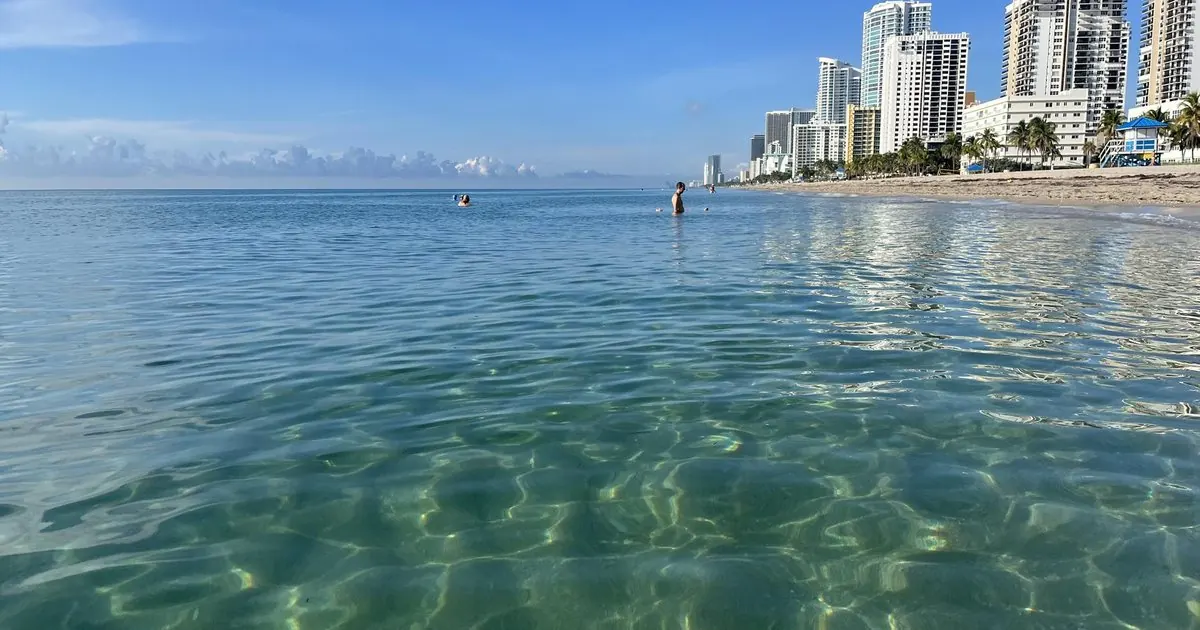
Yes. Tap water in Miami-Dade, Broward and Palm Beach counties is treated and tested to meet EPA drinking-water standards, so it is legally safe to drink. What that standard does not cover is how the water tastes, how hard it is, or what happens to it inside your own plumbing — and those are the reasons most South Florida families choose to filter.
Where Miami’s tap water comes from
Nearly all of the municipal water in Miami-Dade, Broward and Palm Beach counties is pumped from the Biscayne aquifer, a shallow layer of porous limestone that sits just beneath South Florida. Rain soaks down through the ground, collects in that limestone, and the utility pulls it back up through wellfields.
That is good news and less convenient news. The good news is that the aquifer is a large, steady, local supply. The less convenient part is that water sitting in limestone dissolves calcium and magnesium along the way, which is why our water is so hard. More on that below.
From the wellfield, the water goes to a treatment plant, where it is cleaned, disinfected and tested before it heads to your street. The utility checks it regularly against the EPA’s limits and publishes the results once a year.
What the utility adds, and what forms as a result
Public water systems disinfect their water, and South Florida utilities do that with chlorine or chloramine (chlorine combined with ammonia). It is a required step here. It keeps bacteria from growing in the miles of pipe between the plant and your kitchen, and it is a big part of why tap water here is safe to drink in the first place.
The trade-off is that when chlorine meets the natural organic matter in aquifer water, it creates disinfection by-products such as trihalomethanes (THMs) and haloacetic acids. The EPA sets limits on these because of long-term health concerns, and your utility must keep them under those limits. The everyday sign of all this is the faint pool smell some people notice at the tap or in the shower.
If you want the fuller picture, our guide to what is in Florida tap water walks through each item one at a time.
Why Miami water is “very hard”
Hardness is not a safety problem, but it is the thing most Miami homeowners notice first. Municipal water across South Florida commonly measures 200 to 350 parts per million of hardness. On the USGS scale, anything over 180 mg/L is “very hard,” the top category.
Very hard water is perfectly fine to drink. What it does is leave a trail through your house:
- White scale on faucets, showerheads and glass shower doors
- Spots on glasses and dishes, even straight out of the dishwasher
- A film on skin and hair after showering, because soap does not rinse clean
- Scale building up inside your water heater and appliances, which shortens their working life
A salt-based water softener is the only residential method that actually removes calcium and magnesium. Salt-free “conditioners” may reduce how firmly scale sticks, but the minerals stay in the water, so the spots and the soap film stay too. We cover the difference in our South Florida water softener guide.
Not sure what’s actually in your water?
Get a free in-home water test. A certified Biscayne Water technician checks 14 contaminants on the spot and gives you straight answers — no obligation, no pressure.
What the utility report covers, and what it cannot
Each year your utility publishes a Consumer Confidence Report that lists what it found in the water, how those results compare to EPA limits, and whether it had any violations. It is worth reading. For Miami-Dade, Broward and Palm Beach, the report generally shows water that meets EPA standards.
Here is the part people miss: the utility tests water at the plant and in the distribution system. It does not test the plumbing inside your particular home. Once water passes your meter, it is your plumbing, your water heater and your fixtures that decide what comes out of the tap.
The clearest example is lead. Lead is generally not present in the Biscayne aquifer or in the water leaving the plant. But homes built before 1986 may have lead solder on copper joints, and older brass faucets and valves can contain lead as well. Water that sits in those pipes overnight can pick up small amounts on its way to your glass. The utility’s report will look clean, and it is — right up to your property line.
PFAS: the newest item on the list
PFAS, often called “forever chemicals,” are man-made compounds that do not break down in the environment. They have become an emerging concern for water systems across the country, and the EPA has set new limits that utilities are now working to meet. The EWG Tap Water Database lists health-effect categories for PFAS and other contaminants by ZIP code if you want to see what has been detected locally.
This is not a reason to panic. It is a reason to know that the rules are still catching up, and that a reverse osmosis system at the kitchen tap is the standard at-home method for reducing dissolved contaminants like PFAS and lead in the water you actually drink.
Who should consider filtering, and which filter does what
If your water meets EPA standards, filtering is a choice, not a requirement. People in Miami filter for taste, odor, scale and long-term peace of mind. The right equipment depends on which of those bothers you, because no single filter does everything:
- Chlorine taste and smell, plus disinfection by-products: carbon filtration, usually a whole-home carbon tank so every shower and faucet benefits
- Hardness, scale and soap film: a salt-based water softener, the only method that removes the minerals
- PFAS, lead and other dissolved contaminants: reverse osmosis at the kitchen sink for drinking and cooking water
Many families end up with all three, because the problems overlap. Our reverse osmosis vs. whole-home filtration guide explains how they fit together. Biscayne Water’s Complete System bundles whole-home carbon filtration, a softener and a tankless RO unit, installed, for a flat $3,492, with 0% APR financing for up to 18 months available, subject to credit approval.
You do not need any of it to drink the water safely. You may want some of it to enjoy the water.
How to check your own water
- Read your utility’s Consumer Confidence Report. It comes out each year and is posted on your utility’s website. Look at the hardness figure and the disinfection by-product results.
- Look up your ZIP in the EWG Tap Water Database. It lists what was detected in your system and the health-effect categories tied to each item. Its guidelines are set by EWG, not the EPA, so a detection there is not the same as a violation.
- Get our free county water report. Enter your ZIP at our water report page to get a free county water report for your area.
- Test the water at your own tap. Biscayne Water runs a free 14-point in-home water test that measures chlorine, lead, hardness, pH, TDS, iron, sulfates and more, with results on the spot. There is no charge, no obligation and no high-pressure pitch. Some homeowners hear the results and decide their water is fine as it is. That is a perfectly good outcome.
The bottom line
Miami tap water is safe to drink by the standard that matters legally: it is treated, tested and meets EPA limits. It is also very hard, disinfected with chlorine or chloramine, and not tested inside your own home. Knowing both halves of that answer is what lets you decide, calmly, whether a filter belongs in your home. If you are in Miami-Dade, Broward or Palm Beach and want the numbers for your own house, we are a phone call away at (305) 846-7352.